
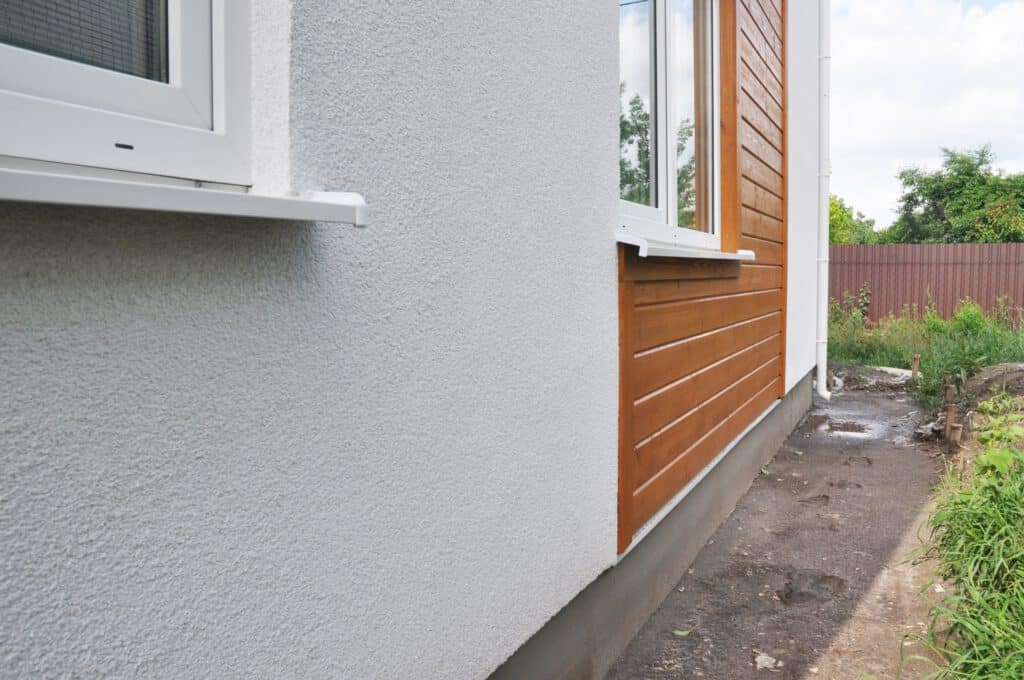
If you’re looking into stucco crack repair in Brevard County, start by checking whether the crack is changing or showing signs of moisture. A thin, stable crack in dry, firmly bonded stucco may only need a localized repair. A crack that widens, reopens after patching, or appears alongside peeling paint, bulging stucco, or an indoor water stain deserves a closer look. Finding the cause first helps you avoid paying to fix the same spot twice.
What the crack can tell you
Portland cement stucco is rigid. It can develop fine cracks as it cures or as the wall moves with temperature changes. An isolated hairline crack that has stayed the same through several rainstorms calls for a different response than a crack that gets longer over time. A dated photo taken from the same spot can help you tell whether it has changed. Include a ruler next to the crack if you can reach it safely.
Look for diagonal cracks that start at window and door corners, especially if they keep reopening. Openings concentrate stress, so the pattern alone can’t tell you whether the damage is limited to the finish. A contractor can assess whether there’s a problem with the stucco bond, movement in the wall, or an issue at the opening. Stair-step cracks that appear to follow block joints, cracks with one side pushed out, or cracks that show up alongside a newly sticking door deserve a closer evaluation.
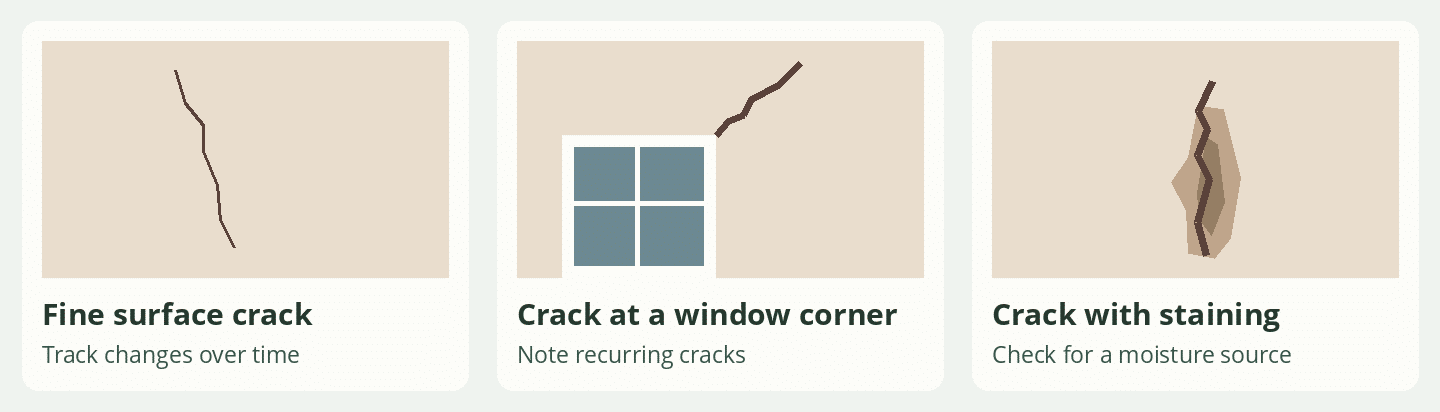
Illustration. Three stucco crack patterns to photograph before requesting an estimate.
Where to look after a heavy rain
Wind-driven rain can wet walls that stay dry during a light shower. If you live in Merritt Island, Cocoa Beach, or Satellite Beach, take a look from ground level once the storm has passed. Note which side of the house took the rain and where stains appeared. Look below window corners, where a roof meets a wall, near exterior fixtures, and along the bottoms of walls. Dark marks that return after rain or white, powdery deposits can be clues that moisture is moving through the surface. The entry point may be higher up or off to the side.
Why the wall behind the stucco matters
On many concrete block homes, stucco is applied directly to the masonry. The contractor may check the bond to the block and look for cracks that continue through the finish into the masonry. On framed walls, stucco commonly covers lath and a water-resistive barrier. The barrier, flashing, and drainage details help direct water back outside. A house can have both types of walls, especially where a framed addition meets an older block house.
If paint peels repeatedly in one spot or the wall shows an indoor stain near a window, ask the contractor to check how water could reach that area. The investigation might include examining the window flashing, roof-to-wall intersection, or a nearby penetration. When evidence points behind the finish, a small exploratory opening may help determine what needs repair before the final scope is set.
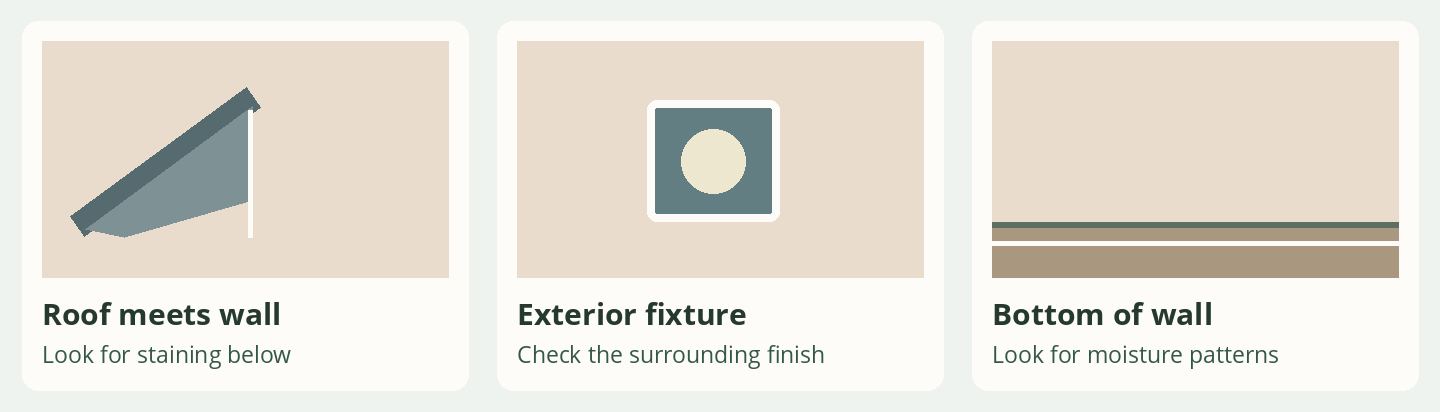
Illustration. Three exterior locations to check after wind-driven rain.
What a stucco repair estimate should cover
For a localized repair, ask how the contractor will prepare the surface, remove any loose material, and match the existing texture. Discuss whether the repaired spot will blend with the surrounding finish or whether painting to a natural break, such as an outside corner, would give a more even look. Ask when the repaired area can be coated under the product manufacturer’s instructions.
If the stucco is bulging or several areas keep cracking, ask what the estimate includes behind the finish. It should identify the expected repair area and explain how hidden damage will be documented and priced if it turns up. Photos of the exposed area can help you understand why the scope changes. If you’re comparing bids, check whether each one covers the same preparation, moisture repairs, texture matching, and coating.
Frequently asked questions
Can I paint over hairline stucco cracks?
Some stable, superficial cracks can be addressed as part of a compatible coating system after proper preparation. Check the coating manufacturer’s instructions and find out why any crack keeps reopening. Peeling or bubbling that returns after painting is a reason to investigate moisture or a coating problem before applying another coat.
Does a hollow sound mean the entire wall needs replacement?
A hollow-sounding area can help a contractor locate possible separation, particularly in stucco applied directly to block. The wall assembly and the extent of the loose material determine how much needs to come off. A small area with a sound perimeter and a broader area with repeated failures can call for different scopes.
Do I need a permit for stucco repair in Brevard County?
Brevard County lists stucco under its residential renovation permit category for properties in its jurisdiction. Ask the building department that serves your address whether your specific scope requires a permit and who will arrange it. If your home is within a city, start with that city’s building department.
What photos should I send a stucco contractor?
Take a wide shot showing the entire wall and a close-up with a ruler for scale. If the crack is near a window, roofline, or addition, include that feature in a third photo. Mention when you first spotted the damage, whether it changes after rain, and whether it has been patched before.
Get a stucco repair estimate
ABC Concrete, Inc. is based in Merritt Island and provides stucco services in Brevard County, including surface preparation and repair. If you’re seeing recurring cracks or loose stucco on your home, request a free stucco estimate or call (321) 454-4240. Send photos and your property location so we can discuss what the wall needs.