
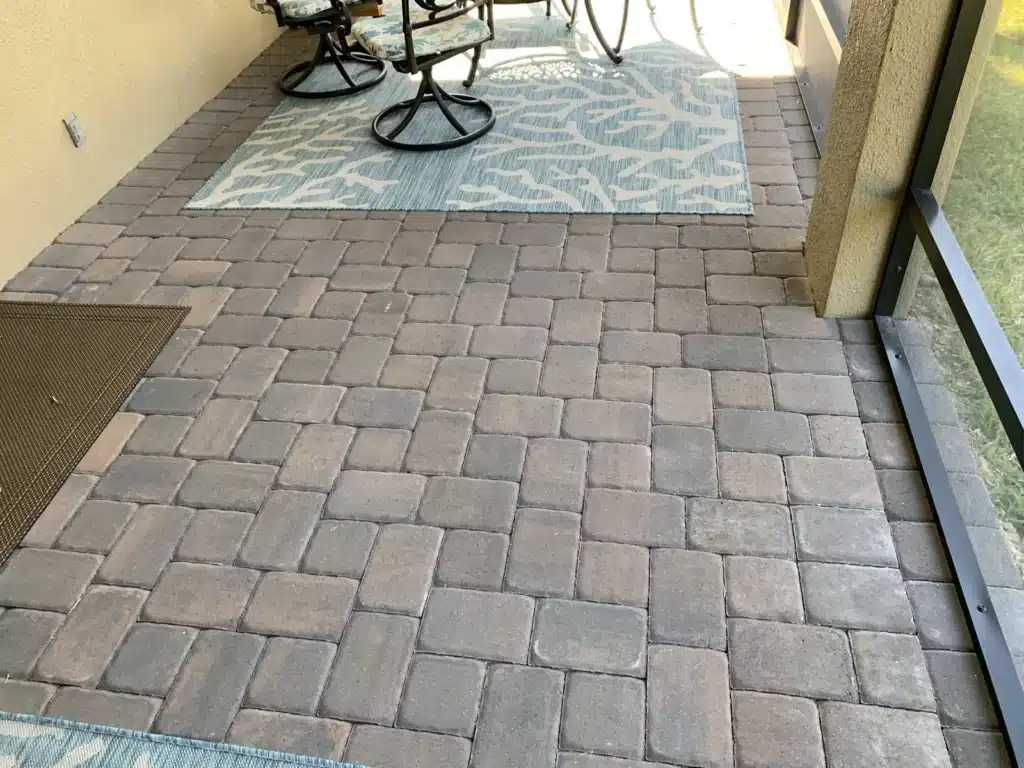
Picture stepping into your backyard on a pleasant evening. You’ve got a table, a few chairs, and enough room to enjoy dinner outside. But before that space becomes a reality, there’s an important choice to make: paver patio installation in Rockledge or a poured concrete patio.
Should you install pavers or pour a concrete patio?
Both materials can create an attractive outdoor area. Both can handle everyday foot traffic and outdoor furniture when properly installed. However, they look different, require different upkeep, and respond differently when repairs are needed.
If you’re planning paver patio installation in Rockledge this October, comparing pavers with poured concrete now can help you avoid an expensive change of plans later.

How Pavers and Poured Concrete Patios Are Built
The biggest difference is how the finished surface is built.
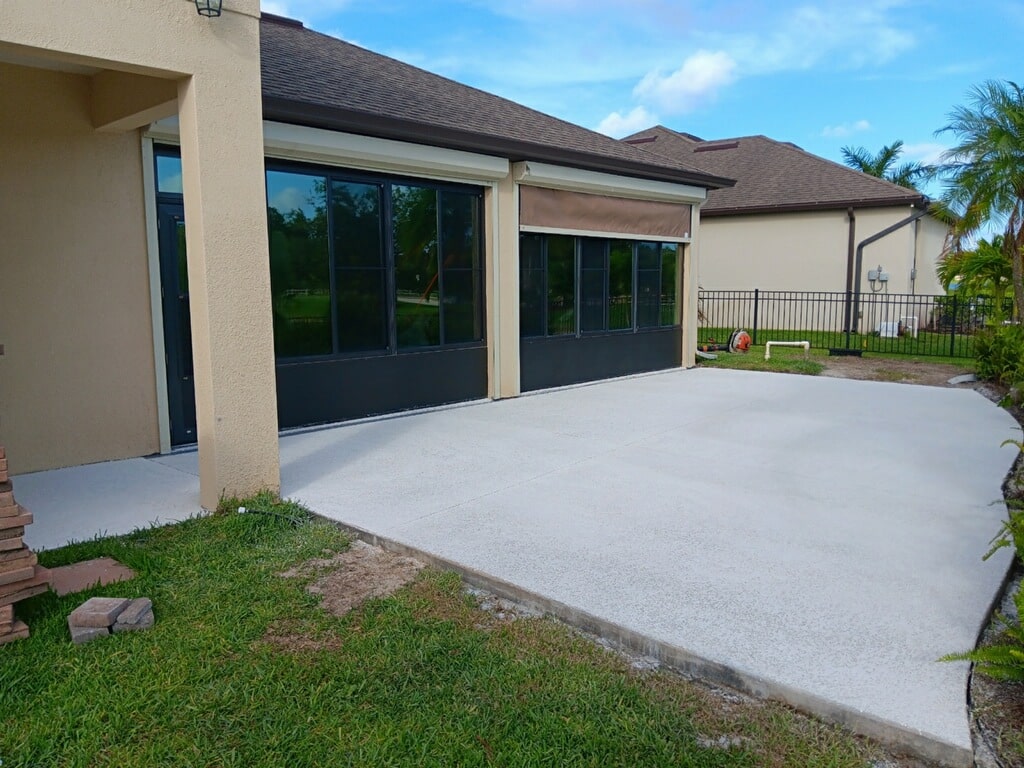
A poured concrete patio starts with a prepared area and forms that set the patio’s shape and elevation. Workers place, level, finish, and allow the concrete to cure.
The result is a continuous surface divided by joints that help manage cracking.
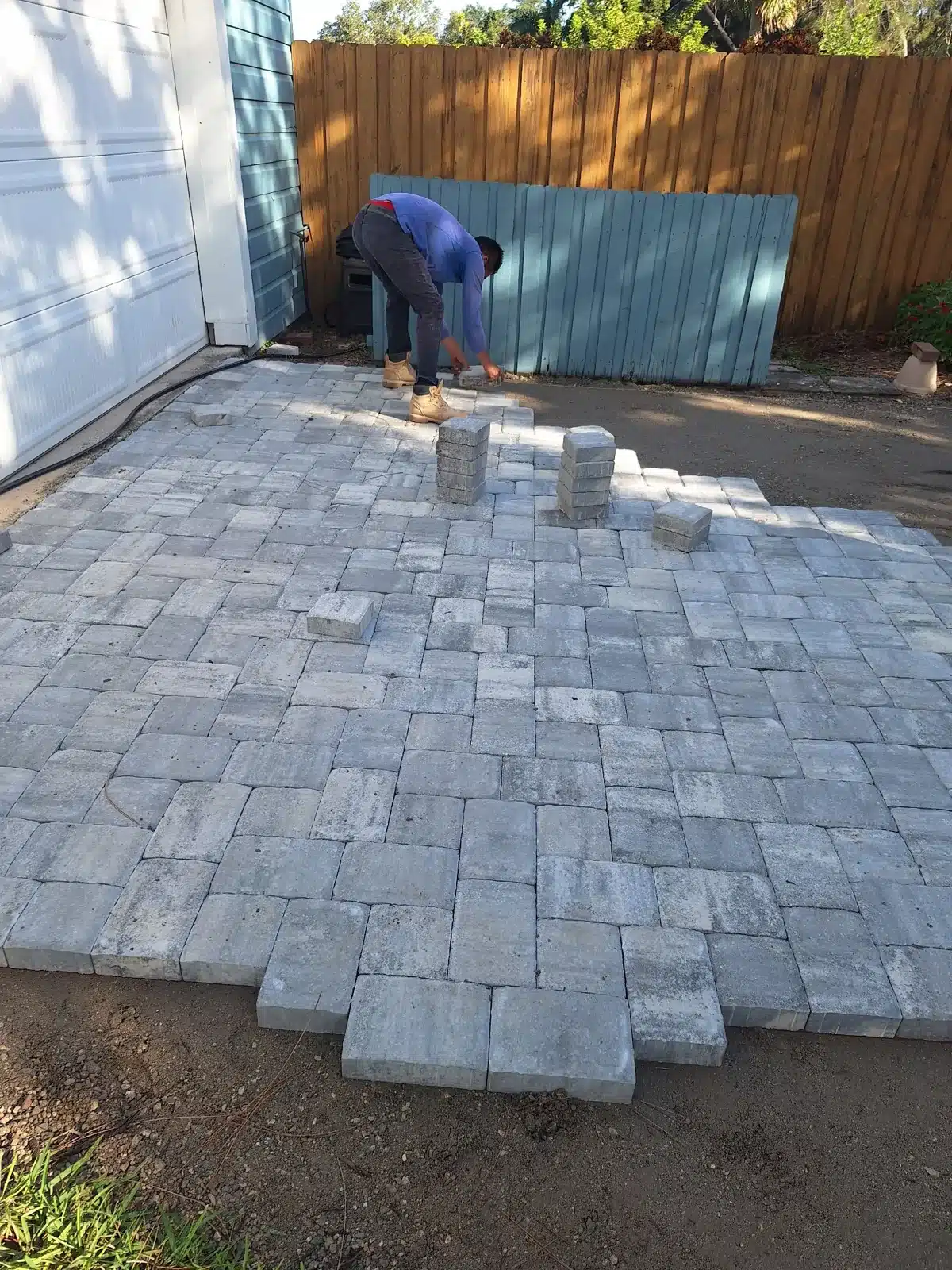
A paver patio uses individual units installed in a planned pattern over a properly prepared base. Joint material fills the spaces between the pavers, while edge restraints help keep everything in place.
Both methods require careful preparation.
For poured concrete, the supporting ground, thickness, joints, and finish all matter. With pavers, excavation, base compaction, edge support, and joint stability are especially important.
Appearance and Design Options
The choice affects more than construction.
Poured concrete offers a clean, simple appearance. It can work well for homeowners who prefer a continuous surface with fewer visible joints.
Finishing options can also change its look. For instance, stamped concrete can create decorative textures or patterns.
Pavers offer more individual design choices. They come in different shapes, colors, and arrangements, making it easier to create borders or visually separate areas.
That flexibility can be useful when you’re designing a patio around a garden, seating area, or outdoor dining table.
Neither option is automatically better. The right material depends on how you want the space to look and function.
Patio Maintenance and Repairs
Many homeowners focus on installation day. But the more important question might be what happens after several years of use.
Both materials need regular cleaning.
Leaves, dirt, pollen, and outdoor spills can leave marks on either surface. Keeping the patio clear of debris and addressing stains early can make routine care easier.
However, repairs work differently.
With poured concrete, you can sometimes seal or repair cracks, depending on their size and cause. Larger repairs may remain visible, especially on decorative surfaces.
If a section needs to be removed and replaced, matching its original color and finish can be difficult.
Pavers offer another approach.
Because the surface consists of individual units, a contractor may be able to lift and reset affected pavers or replace damaged pieces.
This can help if a small area settles or underground work becomes necessary.
Still, pavers aren’t maintenance-free.
Joint material may need attention over time. Weeds can grow in joints where organic material collects, and individual units may shift if the base or edge restraints fail.
Here’s a simple comparison:
| Consideration | Paver patio | Poured concrete patio |
|---|---|---|
| Appearance | Individual units, colors, patterns, and borders | Continuous surface with joints; decorative finishes available |
| Repairs | Affected units may be lifted, reset, or replaced | Some cracks can be repaired; matching patches may remain visible |
| Upkeep | Cleaning plus attention to joints, edges, and shifting | Cleaning plus attention to cracks and surface condition |
| Drainage | Requires planned slope and base; standard pavers are not automatically permeable | Requires planned elevation, slope, and runoff direction |
Be cautious of anyone promising a completely maintenance-free patio.
Good installation can reduce future problems, but weather, foot traffic, and normal wear affect every outdoor surface.
Drainage, Sun Exposure, and Florida Weather
Florida weather deserves attention before any patio installation.
Rockledge homeowners deal with warm conditions, seasonal heavy rain, and periods of strong sunlight. Select and install outdoor materials with those conditions in mind.
One important consideration is drainage.
A patio shouldn’t direct runoff toward the house or create standing water near doors and entrances. The installer needs to consider the patio’s elevation, slope, and surrounding landscape.
Pavers don’t automatically solve drainage problems.
Standard pavers installed over a conventional base are different from specially designed permeable paving systems. A permeable system needs the right materials and underlying drainage design to let water pass through effectively.
The University of Florida’s Florida-Friendly Landscaping guidance recommends considering porous paving where appropriate to help manage stormwater.
Sun exposure also matters.
Some outdoor surfaces can become uncomfortable under direct sunlight. Color, texture, and material affect how the patio feels underfoot, so ask about suitable finishes and test samples when possible.
For concrete, the finish you choose can affect traction. A highly smooth surface may not be the best choice for an area that frequently gets wet.
For pavers, pay attention to surface texture and joint stability.
October can be a practical time to plan a backyard improvement because homeowners can evaluate how their outdoor space performed during the wetter months.
However, the Atlantic hurricane season continues through November. Construction schedules still need flexibility when storms threaten.
A contractor should also check backyard access, soil conditions, and how construction activity might affect nearby landscaping.
Choosing materials based on appearance alone can lead to disappointment if the finished patio doesn’t drain properly or suit the way your family uses the space.
Planning Paver Patio Installation in Rockledge
Start with how you plan to use your backyard.
Will the patio hold a small dining set? Do you need space for larger gatherings? Will children regularly play there? Are you hoping for a decorative design that connects with existing walkways?
These questions help narrow your choices.
A simple poured concrete patio may appeal to someone who wants a straightforward outdoor seating area with a clean finish.
Pavers might be more appealing when the design includes curves, borders, or distinct spaces for different activities.
Your budget also matters.
Installation costs depend on the patio’s size, material, access, preparation needs, and finish. Decorative concrete and detailed paver patterns may require more work than simpler designs.
Instead of choosing based only on an advertised price per square foot, request an estimate that explains the full scope.
Ask about excavation, removal of existing materials, base preparation, drainage, finish options, and site cleanup.
Make sure the proposed design leaves enough room for furniture and walking paths. A patio can look spacious in a drawing but feel crowded once chairs are pulled away from a table.
Are Pavers Always More Expensive Than Concrete?
Not always. A basic poured concrete patio may cost less than a detailed paver installation, but specialty finishes, site preparation, and design choices can change the comparison. Get estimates for the same patio size and intended use.
Can You Replace a Concrete Patio With Pavers?
Often, yes. However, you need to evaluate the existing surface and underlying conditions. Removal, elevation changes, and drainage requirements can affect the project.
How Long Should You Stay Off a Newly Installed Patio?
It depends on the material and installation method. Fresh concrete needs time to cure, while paver systems require proper completion and stabilization. Follow the installer’s instructions before placing furniture or using the space.
Discuss Your Rockledge Patio Project
A well-planned patio should fit your budget, complement your home, and remain practical for everyday use.
If you’re deciding between pavers and poured concrete, you don’t have to choose based on pictures alone.
Browse ABC Concrete’s project gallery for examples of paver and poured concrete outdoor spaces.
ABC Concrete Inc. offers both paver installation and concrete patio services, making it possible to discuss different approaches for your outdoor project.
When requesting an estimate for paver patio installation in Rockledge, share your patio dimensions, preferred design, and how you plan to use the space. The team can review your project requirements and provide an estimate based on the work involved.
Contact ABC Concrete Inc. for a free estimate and take the next step toward a backyard you’ll enjoy using.
Find ABC Concrete Inc. on Google Maps for location details and directions.