
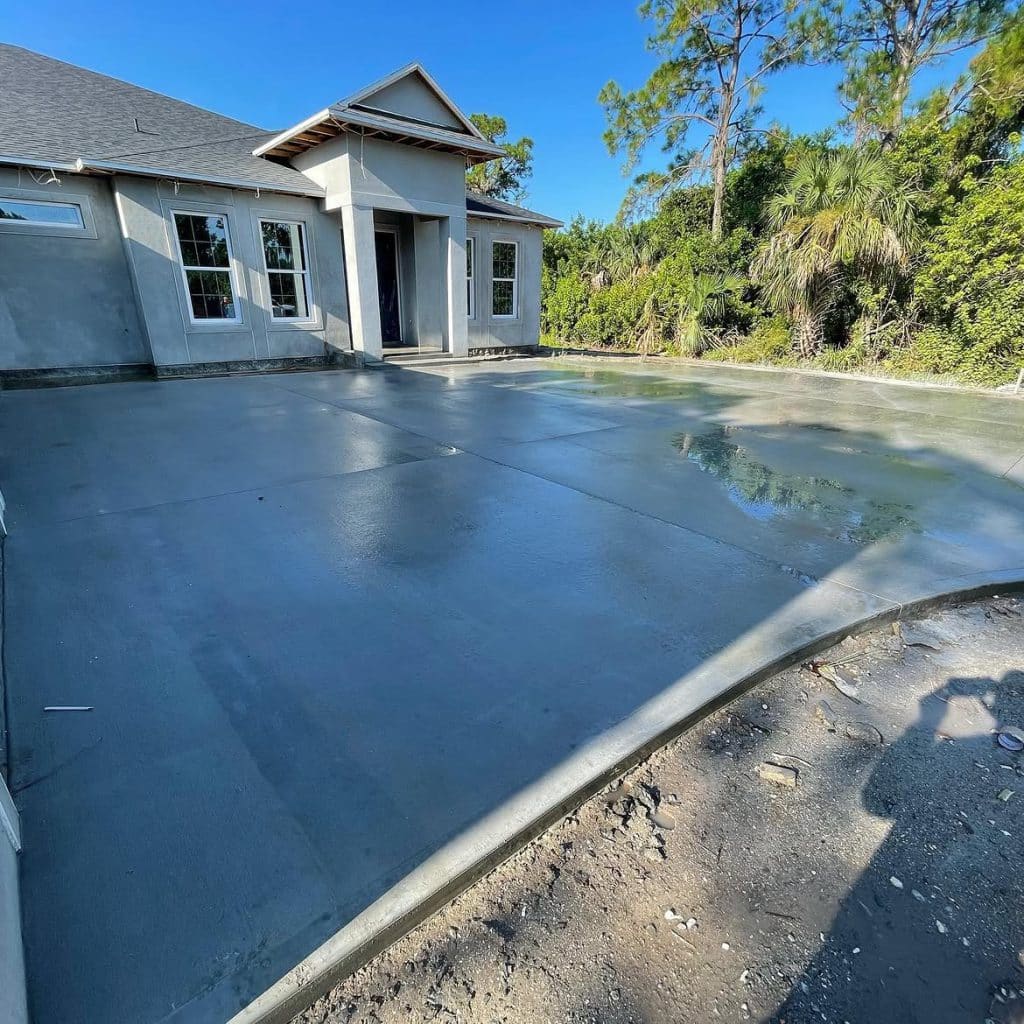
A puddle on your driveway might not seem like much. After all, rainwater has to go somewhere. But what happens when the same spot keeps filling with water after every heavy rain? Understanding concrete driveway drainage in Merritt Island can help you identify the next step.
For Merritt Island homeowners, standing water may signal that a concrete driveway isn’t draining as it should. Sometimes the cause is simple. Other times, the driveway’s slope or the ground beneath it needs attention.
Before paying for repairs or replacing your driveway, it’s worth understanding where the water is coming from and why it stays there.

What Causes Concrete Driveway Drainage Problems?
A well-planned driveway should direct rainwater to a suitable drainage area. Water shouldn’t routinely collect in deep spots or flow toward your home.
If puddles keep appearing, several conditions could explain the problem.
The driveway has a low spot. Concrete may settle over time, leaving a shallow depression where rainwater collects. Even a small change in elevation can affect how water moves across the surface.
The driveway doesn’t have the right slope. If the surface is too flat or tilts toward the wrong area, water may have nowhere to go.
Nearby drainage is blocked. Leaves, dirt, and yard debris can interfere with drainage paths. The driveway itself may be sound, but water can’t leave the area properly.
The surrounding ground has changed. Erosion, settling soil, or landscaping changes can alter where stormwater flows.
How to Check Your Driveway After Rain
Inspect your driveway during a normal rainstorm, if it’s safe to do so. Notice whether water moves toward the street, yard, garage, or house.
Also check how long puddles remain after the rain stops.
Water that drains away shortly after a storm may simply reflect a temporary surface condition. Water that consistently sits in the same depression deserves a closer look.
October is a useful time to make these observations. Florida’s wet season generally ends around early October, although tropical systems can still bring significant rainfall.
The National Weather Service’s Florida rainy-season guidance explains why rainfall patterns can remain variable during this transition.
Warning Signs That Pooling Water Needs Attention
Standing water doesn’t automatically mean your driveway is failing. Still, repeated pooling can create problems worth addressing.
One concern is the condition of the concrete itself.
If water seeps into existing cracks and reaches the material beneath the driveway, it may erode or weaken the supporting soil. Over time, poorly supported sections can move or settle further.
Water can also collect dirt and organic material, leaving stains or slippery areas.
The bigger concern is often where the runoff travels.
Suppose your driveway slopes toward the garage. During a strong storm, water may flow toward the garage entrance instead of away from the building.
Or imagine water repeatedly crossing a walkway used by children, visitors, and delivery drivers. A wet, uneven surface can become a slip-and-trip hazard.
Watch for these warning signs:
- Puddles that repeatedly form in the same location
- Cracks that appear to be widening
- Concrete sections that sit at different heights
- Water flowing toward the garage or house
- Soil washing away beside the driveway
- Drainage problems that appeared after nearby landscaping work
One warning sign doesn’t necessarily mean you need an entirely new driveway. The pattern and underlying cause matter more than the puddle alone.

If water is entering your home or threatening electrical equipment, address the immediate safety issue first instead of waiting for a driveway estimate.
When Repair or Replacement May Help
The right answer depends on the condition of the existing concrete and the source of the drainage problem.
For example, if leaves are blocking a drainage outlet, clearing the obstruction may restore water flow without changing the driveway.
If surrounding landscaping directs water onto the concrete, grading or drainage changes may be more useful than removing the surface.
However, a driveway with widespread settling, uneven sections, and significant cracking may require a more substantial solution.
A repair may make sense when:
- Most of the concrete remains stable.
- The drainage issue affects a small area.
- The main problem is an obstruction or nearby grading.
- A practical correction can restore proper water flow.
Replacement may be worth considering when:
- Large sections have settled or shifted.
- Cracking affects much of the driveway.
- The existing layout directs water toward the home.
- Repeated repairs haven’t addressed the cause.
A new driveway won’t automatically fix standing water. The replacement must be planned with proper elevations, base preparation, and drainage in mind.
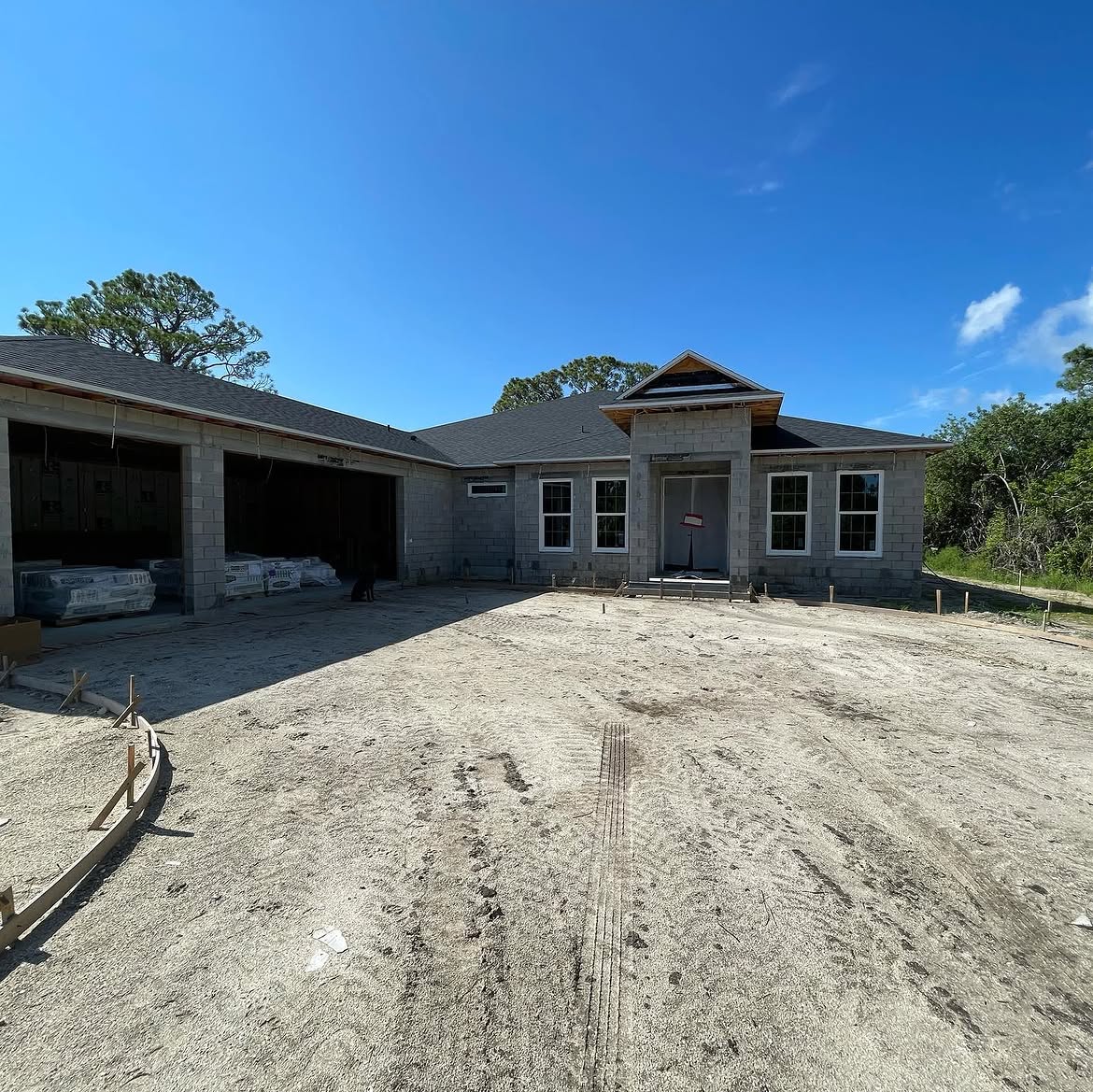
That’s why professional evaluation matters before demolition begins.
At ABC Concrete Inc., concrete driveway services include site preparation, concrete placement, and attention to drainage conditions.
For homeowners considering a replacement, the company’s service information provides a useful starting point for discussing the work involved.
Browse ABC Concrete’s project gallery to see driveway preparation and completed concrete projects.
Permit requirements may also apply, especially when work affects a public right-of-way or drainage easement. Brevard County provides permitting information, but the requirements should be checked for the specific property before work begins.
Preparing for a Driveway Drainage Estimate
Start by gathering a few details about the problem.
You don’t need special equipment to notice where water collects. Take photos after a rainstorm and record which areas stay wet the longest.
Then look for changes in the surrounding ground.
Has a new planting bed been added? Was the yard recently regraded? Has a nearby concrete section started sitting lower than the others?
These details can help a contractor understand the problem.
When requesting an estimate, ask how the proposed work will manage rainwater.
A useful conversation should cover the existing driveway’s condition, the intended surface slope, the supporting base, and any drainage features that may be necessary.
Also ask how the contractor will handle the transition between your driveway and nearby surfaces. A replacement that creates a new low spot near the garage or sidewalk isn’t a good solution.
Can You Pour New Concrete Over a Driveway That Holds Water?
Placing new concrete over an existing surface doesn’t automatically correct drainage. The original slope, surface condition, and available height must be evaluated first.
Does Every Driveway Puddle Mean the Concrete Needs Replacement?
No. Some puddles result from blocked drainage or nearby grading issues. Replacement is generally a bigger decision based on the driveway’s overall condition.
Should You Wait Until Rainy Season Is Completely Over?
Not necessarily. You can assess it before conditions are ideal for construction. Schedule the actual work around weather, site conditions, and the contractor’s recommendations.
The most useful estimate explains how the proposed work addresses the cause of the standing water, not just how the finished driveway will look.
Discuss Your Merritt Island Driveway Project
If water keeps collecting on your driveway, start by finding out why. A careful assessment can help you avoid replacing concrete unnecessarily or spending money on a repair that doesn’t address the cause.
ABC Concrete Inc. provides concrete driveway installation and replacement services for Merritt Island homeowners. Share photos of the affected area and describe what happens during heavy rain.
Explore ABC Concrete’s driveway services or request a free estimate to discuss the next step for your property.
Find ABC Concrete Inc. on Google Maps for location details and directions.